Enterprise AI ROI – Slashing the search tax from the bottom line
This morning, your key person is unavailable, and a critical decision stalls. Hours are lost to searching for approved document versions, contract annexes, and internal rules. All of this runs through the P&L, or profit and loss statement, as a payroll cost with zero real business value. This exact situation makes measuring Enterprise AI ROI crucial.
What does the search tax mean in practice? The term covers the time loss the team spends searching for internal information instead of focusing on value-creating work.
This line item directly hurts the profit and loss statement. It is not the fault of the people. Scattered information forces teams into this way of working.

Enterprise AI ROI – The ROI math of capacity gains
How do we define the Enterprise AI ROI metric? Enterprise AI ROI is the measurable financial benefit stemming from the efficiency improvement of internal knowledge management, which frees up employee capacity.
The calculation relies on international benchmarks and your own operational data. A primary reference point is an international OTRS survey of 500 people, where the majority of respondents indicated spending at least 30 minutes per day searching for information. McKinsey Global Institute estimates can be used as an additional benchmark. In knowledge-intensive roles, nearly twenty percent of working hours can be spent locating internal information. To run a quick executive calculation, you need to pin down the following key variables.
- Daily search time per person
- Hours senior mentors spend on onboarding and training
- The productivity gap during onboarding
- Average fully loaded hourly rate in the organization
Let’s look at a sample calculation to understand the scale. For an organization with 100 people, assuming 30 minutes per day and 220 workdays, at a fully loaded hourly rate of $50, the annual cost can approach $550,000.
100 people × 30 minutes per day × 220 days × $50/hour = $550,000/year
Of course, for precise results, you should calculate with your own hourly rates and headcount. If we reduce searching by just twenty percent during an enterprise pilot, it can lead to significant capacity gains annually. Replacing a single key position when critical knowledge remains undocumented represents an operational risk and can appear as a direct cost to the business.
Data sovereignty and NIS2 compliance – the benefits of controlled AI governance
Increasing efficiency must never come at the expense of security. When colleagues cannot find an immediate internal answer, a new risk appears. A rushed colleague might copy strategic plans into public, unsupervised tools.
What does the Shadow AI phenomenon mean? Shadow AI refers to the use of artificial intelligence that is not supervised by the business, during which sensitive information leaves the controlled IT environment.
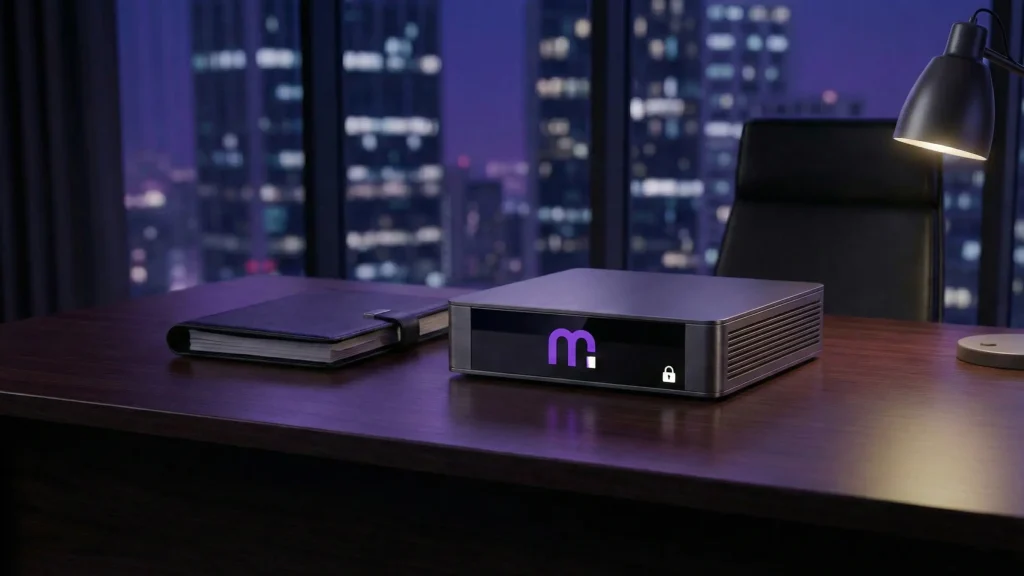
Under the NIS2 directive, traceability is a core requirement. For building a secure on-premises, meaning in-house, infrastructure and Active Directory-based access management, our Shadow AI Playbook for IT Leaders provides practical pointers.
When should you avoid public AI for internal materials?
Given strict compliance requirements, it is worth clarifying the cases where using public platforms is strictly forbidden.
- Analyzing personal client data and HR documents
- Processing strategic financial plans
- Reviewing proprietary source code or internal contract terms
This data must remain exclusively within a closed network, under your own control.
MIRA – Interpretation instead of search in practice
Imagine a scenario where the sales team needs to verify specific customer conditions or previous contract commitments within years of document archives. With MIRA, the same check can be completed in seconds.
The solution is not just another search engine, but an interpretive knowledge platform. Through RAG technology, MIRA works exclusively from uploaded internal documents. This way, answers are traceable to their sources and auditable, helping reduce the risk of hallucination.
Using the system brings easily measurable benefits.
- Significant reduction in repetitive questions.
- Daily relief for senior colleagues during knowledge transfer.
- Onboarding can be shortened by weeks.
- Supported, data-driven decision-making at executive levels.

Enterprise AI ROI – Strategy over administration
Documented knowledge assets are a clear strategic advantage today. During generational shifts and labor market movements, you cannot afford to let expertise walk out the door unnoticed. Preventing Silent Layoff and Enterprise Amnesia is exactly the kind of executive responsibility that directly impacts profitability and maximizes your Enterprise AI ROI metric.
[banner type="mira" text="Calculate the price of the search tax with your own numbers." button="Request the MIRA ROI calculator" link="https://encomira.hu/contact"]Sources
- McKinsey Global Institute 2012 The social economy
- OTRS Group 2018 Study reveals over 80 percent of employees spend half an hour a day searching for information
Our related articles